

















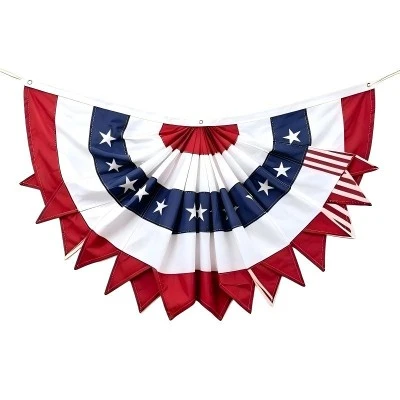


Introduction: Understanding the July 2026 Tariff Changes
The U.S. import environment for Chinese-made flags changed again in July 2026, adding another layer of cost and compliance considerations for American retailers, promotional merchandise distributors, garden centers, event suppliers, and wholesale buyers. On July 23, the Office of the United States Trade Representative (USTR) announced additional Section 301 duties connected to investigations into trading partners' failure to prohibit and effectively enforce restrictions on imports made with forced labor. The announced additional rate for China under this action is 12.5%, subject to applicable rules and exclusions.
For buyers sourcing seasonal decorations, garden displays, retail merchandise, and American Yard Flag orders, the practical question is not simply whether a headline mentions a 27% duty. Importers need to determine the correct tariff classification, establish which additional duties apply to their specific shipment, and calculate the landed cost before confirming purchase orders.
The 27% figure should therefore be treated as a rate that requires verification for a particular shipment, rather than a universal U.S. tariff on every flag manufactured in China. The actual duty burden can depend on the product's HTSUS classification, applicable additional tariff measures, country of origin, entry date, and any valid exclusion or exception.
This article examines the July 2026 policy changes and explains how U.S. buyers can review customs costs, maintain appropriate supply chain documentation, compare suppliers, and prepare purchasing budgets with fewer unexpected expenses.
What Changed in July 2026?
On July 23, 2026, USTR announced final action under Section 301 of the Trade Act of 1974 following investigations into trading partners' measures concerning goods produced with forced labor. The action covered 60 economies and established additional duty rates subject to specified conditions and exceptions.
China falls within the group assigned an additional 12.5% Section 301 rate under this particular action. According to the published notice, the duties generally apply to covered goods entered for consumption, or withdrawn from warehouse for consumption, on or after 12:01 a.m. Eastern Time on July 24, 2026. The notice also describes a limited transition arrangement for qualifying goods already in transit before the effective time and entered before the specified July 28 deadline.
Importers should consult the official notice and U.S. Customs and Border Protection guidance rather than relying exclusively on trade headlines. The effective treatment of an individual shipment depends on the relevant product classification, entry circumstances, and applicable provisions.

Policy Announcement
USTR announced additional Section 301 action on July 23, 2026, in connection with forced labor-related investigations.
China Rate Under This Action
The announced additional rate is 12.5%, subject to the official rules and applicable exclusions.
Effective Date
The general effective time specified in the notice is July 24, 2026, with a limited transition provision for qualifying shipments.
Buyer Responsibility
Verify the applicable duty treatment for the exact goods and customs entry before finalizing the landed-cost calculation.
Official Sources for Tariff Verification
- USTR: Takes Action in Forced Labor Section 301 Investigations
- Federal Register: July 2026 Section 301 Notice
- U.S. Customs and Border Protection: Section 301 Forced Labor Import Duties Guidance
Does the 27% Figure Apply to Every Chinese Flag?
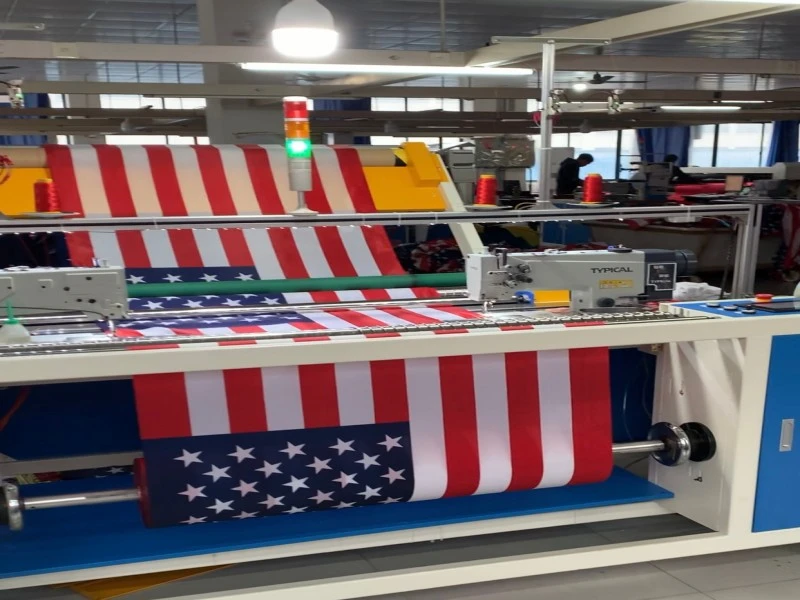
The figure of 27% may appear in sourcing discussions as an estimated combined duty burden. However, it should not be treated as a single official rate applicable to all Chinese-made flags. The July 2026 action establishes an additional 12.5% Section 301 rate for China under the relevant measure, while other duties may apply depending on the specific tariff classification and other measures in force when the goods enter the United States.
For example, a buyer may have received a cost estimate that combines an ordinary customs duty with one or more additional tariff measures. That estimate cannot automatically be applied to a different flag design, material, shipment date, or customs entry. A supplier's quotation alone is also not confirmation of the legally applicable duty rate.
Before using 27% as a final budgeting assumption, purchasing teams should ask their customs broker to review the following details:
The full Harmonized Tariff Schedule of the United States (HTSUS) classification for the actual imported product.
The ordinary customs duty and each potentially applicable additional tariff.
Whether the July 2026 Section 301 measure applies and whether a specific exclusion is available.
Whether the shipment qualifies for any applicable exception or transition provision.
A verified, product-specific calculation is more useful than a general percentage circulated in the market. Importers should document the basis for their estimate and update it when tariff rules, classifications, or shipment circumstances change.
How Buyers Should Recalculate Landed Costs
Changes in import duties can affect retail margins, wholesale pricing, promotional campaign budgets, and inventory replenishment. Buyers should recalculate the full landed cost instead of simply adding a headline tariff percentage to the factory quotation.
Factory Price
Include the agreed product specifications, customization, finishing, labeling, and packaging requirements.
Freight and Insurance
Account for international transportation, cargo insurance, port handling, and other relevant logistics charges.
Customs Costs
Use the duty rates confirmed for the actual classification, entry date, and applicable additional tariff measures.
Domestic Delivery
Include brokerage, handling, inland transportation, and warehouse receiving expenses where applicable.
Consider Timing as Part of the Cost
For seasonal and outdoor merchandise, the cost of a delayed shipment may be significant even when the customs calculation is correct. Inventory that arrives after a holiday, retail reset, or promotional campaign may miss its intended sales window.
Buyers should work backward from the required delivery date, allowing time for artwork approval, sampling, production, inspection, international transit, customs clearance, and domestic transportation. Early planning also leaves more time to resolve classification questions and obtain missing documentation.
When comparing suppliers, use the same order quantity, specifications, packaging assumptions, shipping terms, and delivery destination. A lower factory price does not necessarily result in a lower landed cost if other expenses are higher or the delivery schedule is unsuitable.
Why Customs Classification Matters
Flag buyers should not assume that every flag falls under the same tariff line. Customs classification can depend on the product's construction, materials, and other legally relevant characteristics. A finished decorative flag, a flag component, a banner, and a textile article used for another purpose may require different classification analysis.
The commercial invoice should describe the imported goods accurately. General descriptions such as "decoration" or "textile goods" may not provide enough detail to support an effective customs review. Buyers should work with their supplier and customs broker to align the commercial invoice, packing list, product specifications, and classification decision.
For buyers sourcing American Yard Flag orders for gardens, seasonal promotions, retail displays, or outdoor decoration, the relevant product details should be recorded clearly. Depending on the actual item, these may include fabric composition, dimensions, construction method, printing or embroidery process, and packaging format.
The customs broker can use the actual product information to determine the appropriate classification. Importers should not change product descriptions or country-of-origin declarations simply to obtain a lower duty rate. All declarations should reflect the facts of the transaction and comply with U.S. customs requirements.
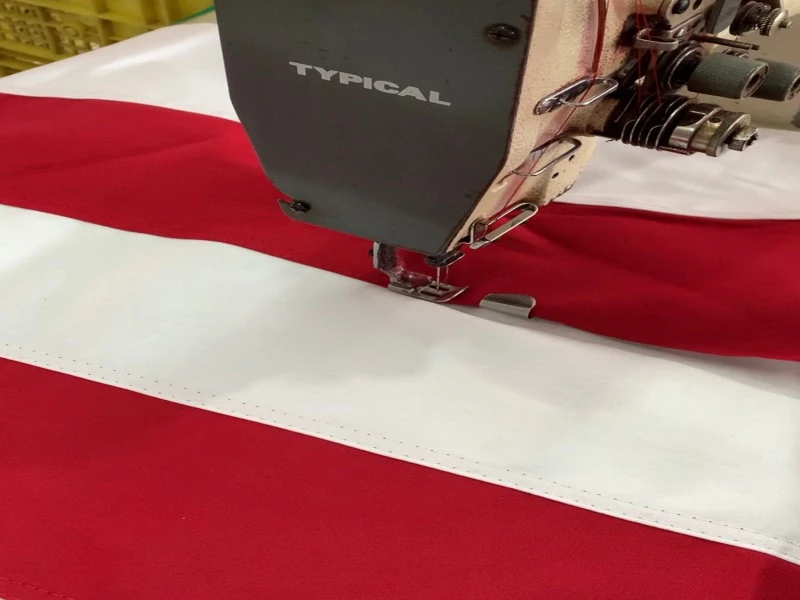
Forced Labor Compliance and Supply Chain Records
The July 2026 Section 301 action is connected to U.S. concerns about trading partners' failure to prohibit and effectively enforce restrictions on goods produced with forced labor. It is distinct from the broader responsibility importers have to understand and manage forced-labor risks in their own supply chains.
U.S. importers should not assume that paying a tariff automatically resolves a forced-labor compliance concern. Tariff assessment and admissibility are separate questions. Goods may face additional scrutiny or other legal restrictions depending on the facts, applicable laws, and enforcement actions. Buyers should consult qualified compliance professionals when a supplier, raw material, production location, or upstream source presents a potential risk.
Supply Chain Documents Buyers Should Review
- Supplier identification: Company identity, manufacturing location, and relevant subcontractor information.
- Transaction records: Purchase orders, commercial invoices, packing lists, and product specifications.
- Production information: Available records identifying material sources and manufacturing processes.
- Compliance evidence: Supplier declarations and supporting documents relevant to the importer's compliance program.
These records do not automatically guarantee compliance, and a supplier declaration alone may not be sufficient in every situation. Buyers should assess documentation in proportion to the risks of the goods and supply chain, investigate inconsistencies, and retain records according to their legal and internal requirements.
What to Check When Choosing a Flag Manufacturer
When tariff uncertainty increases, buyers may be tempted to choose a supplier solely on the basis of the lowest quoted price. A more reliable purchasing decision considers manufacturing capability, product consistency, communication, documentation, and the ability to meet the required delivery schedule.
Product Specifications and Sample Approval
Confirm dimensions, fabric, color requirements, artwork, finishing, attachment details, and packaging before production. An approved sample or specification sheet can reduce misunderstandings and costly rework.
Production and Quality Control
Ask how the manufacturer checks incoming materials, color consistency, stitching, printed or embroidered details, dimensions, and finished packaging. Agree on acceptance criteria before mass production begins.
Order Communication and Delivery Planning
Confirm the production schedule, inspection arrangements, shipping terms, and the process for handling delays or nonconforming goods. Establish who is responsible for providing documents required by the customs broker and freight forwarder.
Transparent Commercial Information
A useful supplier quotation separates the product price from freight estimates and other known charges. Import duties should be confirmed independently for the specific customs entry rather than promised as a fixed rate without a clear legal basis.
MAOSEN's published company information states that the company was founded in 1997 and has manufacturing capabilities covering embroidery, appliqué, digital printing, sewing, and flagpole production. Buyers should confirm the precise specifications, sample arrangements, production schedule, and documentation requirements for their own orders before making a purchasing decision.
Purchasing Strategies for U.S. Buyers
Strategy 1: Review Duties by Product
Do not apply one tariff percentage to an entire catalog without checking the relevant classifications. If an order includes multiple flag styles or other textile goods, ask the customs broker to review each category separately.
Strategy 2: Compare Landed Costs
Prepare a consistent comparison sheet for every supplier. Include the same quantities, specifications, delivery terms, freight assumptions, and verified tariff treatment. If the duty rate remains uncertain, mark the estimate as provisional.
Strategy 3: Plan Seasonal Orders Early
Work backward from the required in-store or event date. Allow time for artwork approval, samples, production, inspection, shipping, customs clearance, and domestic delivery.
Strategy 4: Review Pricing and Inventory
Importers may need to revisit wholesale pricing, retail margins, reorder points, and safety stock when landed costs change. Decisions should reflect actual cost calculations and demand forecasts rather than an unverified tariff assumption.
For an upcoming order of American Yard Flag merchandise, buyers can request a quotation based on their target quantity, artwork, dimensions, packaging, and required delivery window. The quotation can then be reviewed alongside the customs broker's duty estimate to create a more realistic purchasing budget.
Import Purchasing Checklist
- Product definition: Confirm the item description, materials, dimensions, construction, and packaging.
- Classification: Obtain the applicable HTSUS code and verify ordinary and additional duty treatment with a customs broker.
- Tariff date: Confirm which rules apply based on the expected customs entry date and any valid transition provision.
- Exclusions: Check whether a specific product exclusion applies and retain supporting evidence where needed.
- Country of origin: Ensure the declared origin accurately reflects the goods and their production.
- Compliance records: Maintain appropriate supplier, purchase, production, and material documentation.
- Cost calculation: Include freight, insurance, duties, brokerage, handling, and domestic delivery.
- Delivery schedule: Allow time for sample approval, production, inspection, shipping, and customs clearance.
- Commercial terms: Agree on specifications, inspection criteria, payment terms, delivery responsibilities, and procedures for handling changes.
Completing these checks before a shipment leaves the supplier can make it easier to correct missing information. Where the classification or tariff treatment is unclear, buyers should resolve the question with their customs broker before committing to a final landed-cost figure.
FAQ
No. The July 2026 action established an additional 12.5% Section 301 rate for China under the relevant measure. The final duty calculation depends on the product's classification, other applicable tariff measures, exclusions, and entry circumstances. Buyers should ask a customs broker to confirm the rate for the exact goods.
The Federal Register notice generally sets the effective time at 12:01 a.m. Eastern Time on July 24, 2026, for covered goods entered for consumption or withdrawn from warehouse for consumption. It also describes a limited in-transit exception with a July 28, 2026 deadline. Importers should verify whether their shipment meets the precise conditions.
No. Tariff payment does not by itself resolve every admissibility or supply chain compliance issue. Importers should review applicable U.S. law, maintain appropriate documentation, and seek qualified advice if they identify a potential forced-labor risk.
Provide the intended use, dimensions, artwork, material preferences, construction requirements, order quantity, packaging details, delivery destination, and required arrival date. Clear specifications help the supplier prepare a comparable quotation and give the customs broker better information for classification review.
Confirm the classification and applicable duty rates before shipment, use a complete landed-cost worksheet, review the origin and product documentation, and leave time to resolve customs questions. Avoid treating a general tariff percentage as a confirmed rate for every product.
Conclusion: Make Sourcing Decisions With Verified Costs
The July 2026 U.S. Section 301 action has added a new duty consideration for importers purchasing goods from China. Although the headline figure of 27% may be used in some cost discussions, buyers should not treat it as a universal tariff rate for all flags. The additional rate announced under this particular action is 12.5% for China, subject to the official rules and applicable exclusions. The final combined duty burden must be checked against the actual product classification and other measures in force.
For American retailers and wholesale distributors, the most practical response is to verify tariff treatment early, maintain accurate supplier and customs records, compare landed costs consistently, and leave enough time for production and shipping. A transparent purchasing process can help buyers manage cost uncertainty without relying on unsupported assumptions.
When comparing Chinese flag suppliers, focus on verified manufacturing capability, clear product specifications, consistent quality control, communication, and delivery planning. These factors help buyers evaluate the complete purchasing arrangement rather than relying on a single quoted unit price.
Discuss Your Flag Purchasing Requirements with MAOSEN
MAOSEN welcomes inquiries from retailers, wholesalers, distributors, and commercial buyers who need to discuss flag designs, product specifications, order quantities, customization, and production schedules. Share your artwork, dimensions, construction preferences, packaging requirements, and target delivery date so the team can review your request.
Before placing an import order, confirm the applicable tariff classification and duty treatment with your customs broker. Clear product specifications and early purchasing communication can help your team prepare a more complete sourcing plan.


