

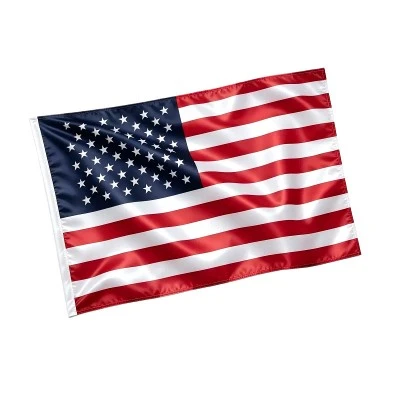


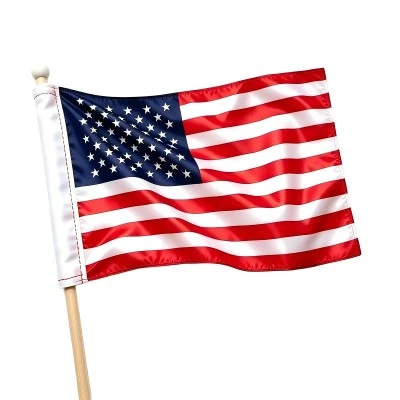






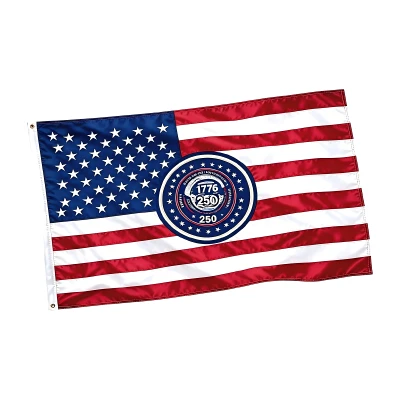



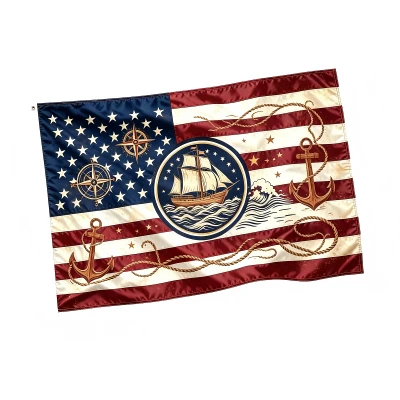
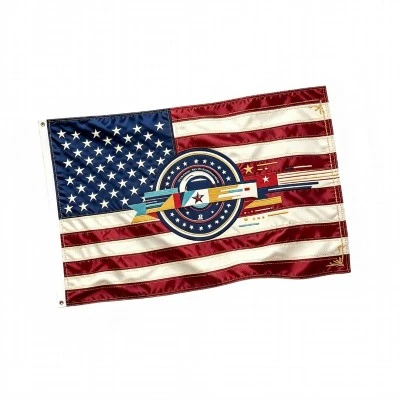
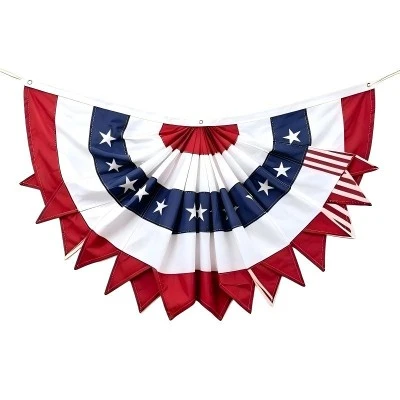


The flag of the United States of America is rectangular in shape, with a length-to-width ratio of 19:10. It is composed of red, white, and blue. The design consists of two parts: in the upper left corner, on a blue background, are 50 white stars arranged in alternating rows of six and five, for a total of nine rows; the remaining part of the flag consists of 13 alternating red and white stripes, with seven red stripes and six white stripes.
On June 14, 1776, the Second Continental Congress approved the Stars and Stripes as the official flag of the United States; on June 14, 1777, the first national flag (with 13 stars) was created; in December 1817, the U.S. Congress passed the Flag Act with 13 stripes and 22 white stars on a blue background, the number of stars being equal to the number of states in the Union; on July 4, 1960, the United States finalized the 50-star version of the Stars and Stripes.
The common interpretation of the American flag is that red symbolizes strength and courage, white symbolizes purity and innocence, and blue symbolizes vigilance, perseverance, and justice. The American flag's aspect ratio is 10:19, and its dimensions for outdoor flagpoles are as follows (cm): 160*300, 130*247, 100*190, 70*133. Flag manufacturing processes include: watermarking, heat transfer printing, digital inkjet printing, and screen printing.